

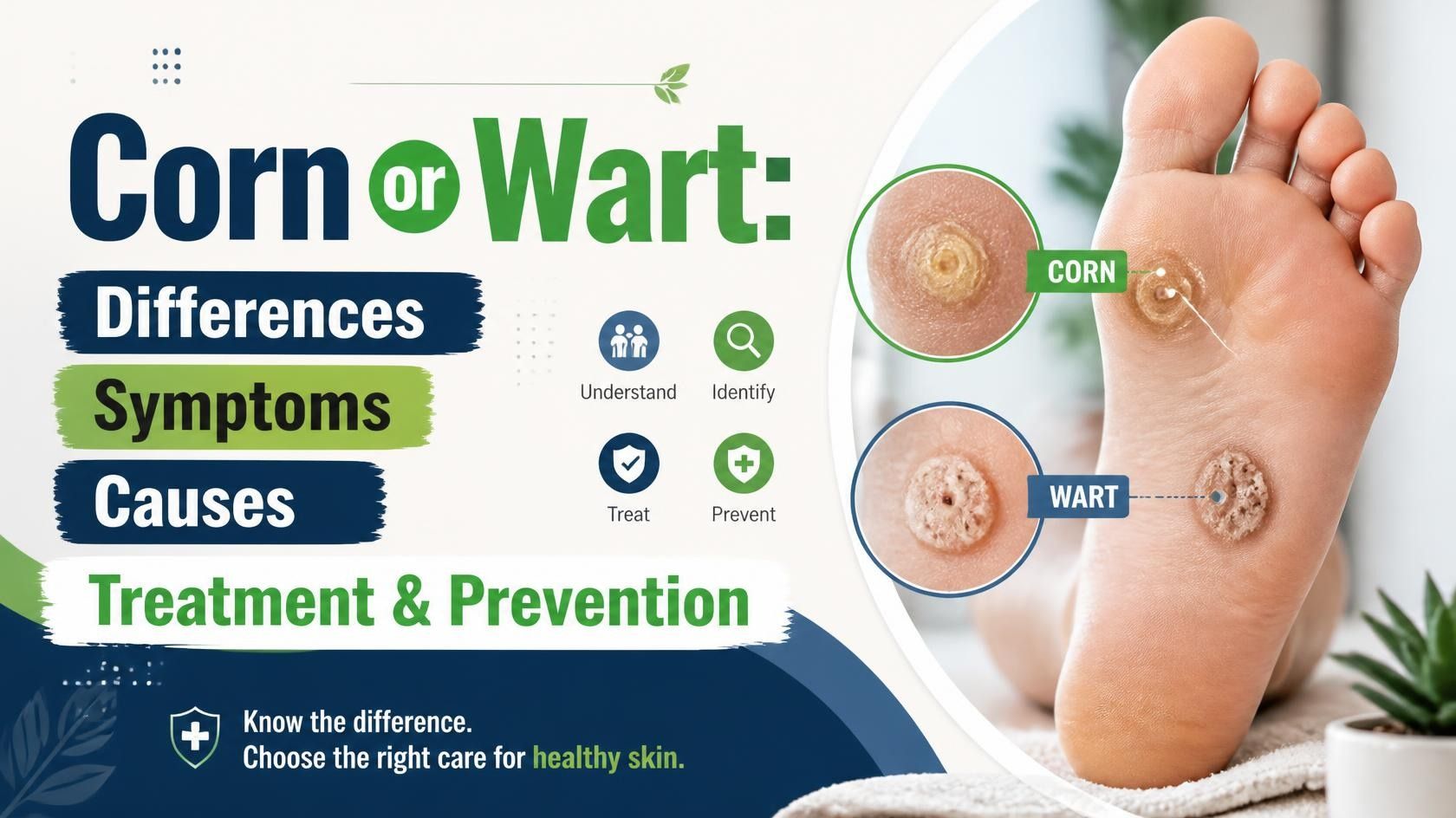
Corns and warts can look similar at first glance, especially when they appear on the feet. Both can cause rough or thick skin. However, they have different causes and need different treatments. A corn usually develops because of repeated pressure or friction. A wart is caused by a viral infection.
Knowing the difference between a corn or wart can help you choose the right care. It can also prevent the problem from becoming painful or spreading. This guide explains their symptoms, causes, appearance, diagnosis, treatment, and prevention in simple terms.
Quick Overview
A corn is a small area of thickened skin caused mainly by pressure and friction. It often develops on the toes, sides of the feet, or soles. Corns are not contagious.
A wart is a skin growth caused by certain types of human papillomavirus, commonly called HPV. Warts can occur on different parts of the body and may spread through direct contact or contaminated surfaces.
| Feature | Corn | Wart |
| Main cause | Pressure and friction | Viral infection |
| Contagious | No | Yes |
| Common location | Feet and toes | Hands, feet, and other areas |
| Appearance | Hard, thick skin | Rough or grainy growth |
| Pain | Often hurts with pressure | Plantar warts may hurt while walking |
| Treatment | Pressure reduction and skin care | Salicylic acid, freezing, or medical treatment |
Key Difference Between Corn or Wart
The biggest difference is the cause. Corns form when the skin protects itself from repeated pressure or rubbing. Warts develop after a virus infects the skin.
A corn often has a firm central core. It usually follows the pressure points of shoes or walking. A wart may have a rough surface and tiny dark dots caused by small blood vessels.
Another useful clue is the direction of skin lines. Skin lines may continue across a corn, while they are often interrupted by a wart. However, this is not always easy to see without professional examination.
Understanding What a Corn Is
A corn is a concentrated area of thickened skin. It develops as the body tries to protect an area from repeated pressure or friction. Tight shoes, uncomfortable footwear, and abnormal pressure while walking can all contribute.
Corns commonly appear on the tops or sides of toes. They can also develop between toes or on weight-bearing areas of the feet. They may become painful when pressure continues.
Types of Corns
Corns are generally divided into several common types.
Hard Corns
Hard corns are the most common type. They usually appear as small, firm patches of thick skin. They often develop on the tops of toes or areas that receive repeated pressure.
Soft Corns
Soft corns usually develop between toes. Moisture and friction can make the skin softer than a hard corn. They may become particularly uncomfortable when toes rub against each other.
Seed Corns
Seed corns are small corns that can appear in groups. They are often found on less weight-bearing areas of the foot. They may cause mild tenderness or discomfort.
Understanding What a Wart Is
A wart is a noncancerous skin growth caused by certain HPV types. The virus can enter through tiny breaks in the skin. Once present, it can cause the skin to grow differently and create a wart.
Warts can occur on the hands, feet, face, and other areas. Some disappear without treatment, while others remain for months or longer. Treatment may be useful when a wart is painful, spreading, or persistent.
Common Types of Warts
There are several types of warts. Their appearance often depends on where they develop.
Common Warts
Common warts are usually rough and raised. They often develop on fingers, hands, and around the nails.
Plantar Warts
Plantar warts develop on the soles of the feet. Pressure from walking can push them inward, making them appear flatter. They may cause pain when standing or walking.
Flat Warts
Flat warts are smaller and smoother than many other warts. They may occur in larger numbers, especially on the face, arms, or legs.
Filiform Warts
Filiform warts have thin, thread-like projections. They commonly develop around the face, mouth, or neck.
Causes of Corn or Wart
Understanding the cause makes identification easier. Corns are mainly related to mechanical pressure. Warts are caused by viral infection.
Causes of Corns
Common causes include:
- Tight or narrow shoes
- Shoes that rub against the toes
- High pressure on certain parts of the foot
- Abnormal walking patterns
- Foot deformities
- Repeated friction
- Poorly fitting footwear
Causes of Warts
Warts are caused by certain HPV types. The virus can spread through direct contact or by touching contaminated surfaces. Walking barefoot in shared wet areas may increase exposure to plantar wart viruses.
Small cuts, cracks, or damaged skin can make it easier for the virus to enter.
Visual Signs of Corn or Wart
Signs of a Corn
A corn often looks like a round, thickened patch of skin. It may have a harder center and surrounding dry skin. It is commonly located where shoes or toes create pressure.
Signs of a Wart
A wart may look rough, grainy, or uneven. Plantar warts can have tiny dark spots. These spots are sometimes mistaken for dirt but may represent small blood vessels.
Corn vs Wart Comparison Image
A comparison image can make identification easier. A corn usually appears as concentrated thick skin with a central hard area. A wart often has a rough surface and may interrupt normal skin lines.
For educational content, a clear comparison image should show the location, surface texture, central area, and typical appearance of both conditions. Images can support identification, but they should not replace medical diagnosis.
Symptoms of Corn or Wart
Corn Symptoms
Common corn symptoms include:
- Localized thick skin
- Hard or waxy texture
- Tenderness
- Pain when pressure is applied
- Dry or flaky surrounding skin
- Discomfort while wearing shoes
Wart Symptoms
Wart symptoms can include:
- Rough or grainy skin
- A raised or flattened growth
- Tiny dark dots
- Pain when walking, especially with plantar warts
- Multiple nearby growths
- Possible spread to other areas
How Doctors Diagnose Corn or Wart
A healthcare professional can usually diagnose these conditions by examining the skin. Medical history and location also provide useful clues.
Corn Diagnosis
For a suspected corn, a doctor examines the thickened area and looks for pressure or friction patterns. They may also check footwear, walking mechanics, and foot structure.
Wart Diagnosis
A wart is usually diagnosed through visual examination. In unusual cases, a doctor may remove a small sample of tissue for testing to rule out another skin condition.
Treatment Options for Corns
Reduce Pressure
Reducing pressure is one of the most important steps. Avoid activities or footwear that repeatedly irritate the affected area.
Wear Proper Footwear
Choose shoes with enough room for your toes. Avoid narrow shoes that squeeze or rub against the foot.
Use Protective Pads
Cushioning pads can reduce pressure on a corn. They can be useful when placed correctly and used with properly fitting footwear.
Moisturize Skin
Regular moisturizing can help soften dry and thick skin. Avoid aggressively cutting the corn yourself.
Professional Removal
A healthcare professional can safely trim thickened skin when appropriate. This may provide relief when a corn is painful or persistent.
Wart Treatment Comparison Image
A treatment comparison image can show common options such as salicylic acid, cryotherapy, laser treatment, and other medical procedures. Treatment choice depends on the wart type, location, size, and duration.
Treatment Options for Warts
Salicylic Acid
Salicylic acid helps gradually remove wart tissue. It is commonly used in over-the-counter wart treatments. Follow the product instructions carefully.
Cryotherapy
Cryotherapy freezes the wart. A healthcare professional may use this method when home treatment does not work or when the wart is difficult to treat.
Laser Treatment
Laser treatment may be considered for stubborn warts. It is generally performed by a medical professional.
Minor Surgery
Some persistent warts may require a minor procedure to remove abnormal tissue. A doctor decides whether this option is appropriate.
Immune Therapy
Certain treatments aim to stimulate the immune system to respond to the wart. These options are usually considered for difficult or recurring cases.
Risk Factors for Corn or Wart
Corn Risk Factors
Risk factors include tight footwear, frequent friction, foot deformities, high pressure points, and activities that place repeated stress on the feet.
Wart Risk Factors
Wart risk factors include close contact with infected skin, walking barefoot in shared areas, damaged skin, and a weakened ability to fight infections.
Real World Examples
Example One
A person develops a hard, painful spot on the side of a toe after wearing narrow shoes. The location and pressure pattern strongly suggest a corn.
Example Two
A rough growth appears on the sole and becomes painful during walking. Tiny dark spots are visible. A plantar wart may be responsible.
Example Three
Several small rough growths appear on the fingers. They are not caused by shoe pressure. This pattern may be more consistent with common warts.
Example Four
A thick area develops between two toes where moisture and rubbing occur. A soft corn may be the likely explanation.
Common Mistakes When Identifying Corn or Wart
Mistake One
Assuming every hard spot on the foot is a corn can lead to incorrect treatment. Some plantar warts can look very similar.
Mistake Two
Trying to cut a suspected wart or corn with a sharp tool at home can cause injury or infection.
Mistake Three
Ignoring a painful growth for a long time can allow the problem to continue or worsen.
Mistake Four
Using a treatment without checking the diagnosis can irritate healthy skin and delay proper care.
Corn or Wart Prevention Tips
Preventing Corns
Wear comfortable shoes with enough toe space. Keep feet moisturized and use protective cushioning when needed. Address foot problems that create repeated pressure.
Preventing Warts
Avoid touching another person’s wart. Keep cuts covered and avoid sharing personal items such as towels or footwear. Wear sandals in shared wet areas.
Related Comparisons
Corn vs Callus
A corn is usually smaller and more concentrated. A callus is generally a broader area of thickened skin caused by repeated pressure or friction.
Wart vs Skin Tag
A wart is caused by a viral infection and often has a rough surface. A skin tag is a soft, benign growth that commonly hangs from the skin.
Plantar Wart vs Corn
Both can occur on the sole of the foot. A plantar wart may interrupt skin lines and show tiny dark dots. A corn usually has a more defined hard center and follows a pressure point.
Beginner to Advanced Understanding
Beginner Level
Remember the basic rule: corns are usually caused by pressure and friction, while warts are caused by a virus.
Intermediate Level
Look at location, texture, pain, and skin patterns. Also consider whether the area is linked to footwear pressure or possible viral exposure.
Advanced Level
Persistent or unusual lesions may need professional examination. A healthcare professional can distinguish similar-looking conditions and recommend suitable treatment.
Foot Health and Long Term Impact
Ignoring recurring foot problems can affect comfort and movement. Pain may cause a person to change the way they walk, which can place extra stress on other areas.
Good footwear, regular foot care, and early attention to unusual skin growths can support long-term foot health. People with diabetes, poor circulation, or reduced sensation should seek professional advice before treating foot lesions themselves.
Advantages and Disadvantages of Early Treatment
Advantages
Early treatment can reduce pain and irritation. It can also prevent a corn from becoming more severe or help stop a wart from spreading.
Early care may also make treatment easier. Identifying the underlying cause can reduce the chance of repeated problems.
Disadvantages of Delayed Treatment
Waiting too long can allow discomfort to continue. A wart may spread, while a corn may become increasingly painful if pressure remains.
Self-treatment without a correct diagnosis can also cause skin damage. Persistent, bleeding, changing, or very painful growths should be evaluated by a healthcare professional.
Exercises With Answers
Question One
Question: What usually causes a corn?
Answer: Repeated pressure and friction, often from footwear or walking patterns.
Question Two
Question: Is a wart contagious?
Answer: Yes. Warts can spread through direct contact or contaminated surfaces.
Question Three
Question: Which condition may have tiny dark dots?
Answer: A wart, especially a plantar wart, may have tiny dark dots.
Question Four
Question: Are corns caused by a virus?
Answer: No. Corns are mainly caused by pressure and friction.
Question Five
Question: When should you see a doctor?
Answer: Seek professional advice for persistent, painful, bleeding, changing, or uncertain growths.
FAQs
How can you tell if it is a corn or a wart?
A corn is usually linked to pressure and has a hard central area. A wart may have a rough surface, interrupted skin lines, and tiny dark dots.
Is a corn contagious like a wart?
No. Corns are not contagious because they result from pressure and friction rather than infection.
Can a plantar wart look like a corn?
Yes. Plantar warts can closely resemble corns, especially on weight-bearing areas of the foot.
What is the fastest way to treat a corn?
Removing the source of pressure is important. A healthcare professional can safely remove thickened skin when necessary.
Can warts go away without treatment?
Yes. Some warts disappear naturally as the immune system responds to the virus, although this can take time.
Should I cut a corn or wart myself?
No. Cutting either condition with a sharp tool can cause bleeding, infection, and additional skin damage.
When should I get a corn or wart checked?
See a healthcare professional if you are unsure what the growth is, if it is very painful, keeps returning, spreads, bleeds, or does not improve with appropriate care.
Conclusion
Knowing the difference between a corn or wart can help you make better decisions about foot and skin care. Corns usually develop because of repeated pressure and friction, while warts are caused by certain types of HPV. Their appearance can sometimes overlap, particularly when a wart develops on the sole of the foot.
The safest approach is to avoid guessing when the growth is unusual or persistent. Use comfortable footwear, reduce repeated pressure, keep your skin protected, and avoid picking or cutting suspicious growths. When symptoms continue or the diagnosis is uncertain, professional evaluation is the best choice. Early attention can improve comfort and reduce the risk of complications.