

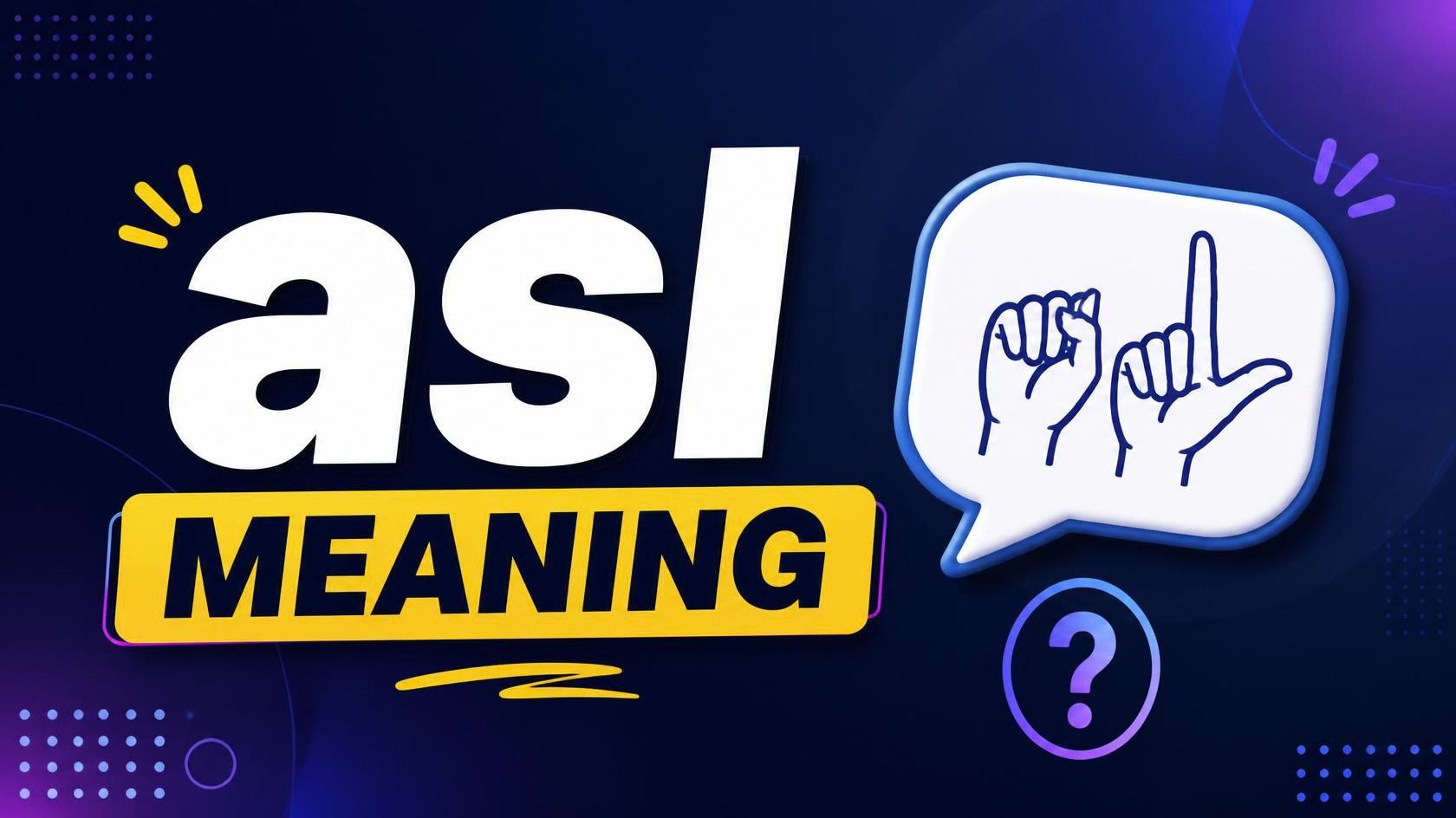
Someone just sent you “ASL?” and left you guessing. What does it mean? In old online chats, asl meaning usually stands for Age, Sex, Location. People used this quick phrase when meeting strangers online. It helped them ask basic personal questions without typing a long sentence. You could often spot it in chatrooms, instant messaging, and anonymous chats. Today, this expression feels more like old-school internet language. Still, it can appear in texting, social media, or conversations about early internet culture.
There’s another important meaning you shouldn’t overlook. ASL also stands for American Sign Language. It refers to a visual language used by many people in the Deaf community. That meaning has no connection to the old chat abbreviation. So, always check the context before replying. If someone simply writes “ASL?” they may want personal details. If they discuss signing or Deaf culture, they likely mean American Sign Language. Knowing the difference keeps conversations clear.
Quick Answer
ASL meaning in old online chats is Age, Sex, Location.
Today, ASL can also mean American Sign Language.
Always check the context before sharing personal details.
Key Facts About ASL
ASL has two major meanings, so context matters. In older online conversations, it means Age, Sex, Location (A/S/L). It worked as a quick text abbreviation for asking basic personal details.
The second meaning is American Sign Language. It refers to a visual language used by many people in the Deaf community in the United States and parts of Canada.
When someone types ASL? in an anonymous chat, they may want to know who you are. However, a discussion about learning ASL usually points to the signed language.
| Fact | Meaning |
| Common chat meaning | Age, Sex, Location |
| Other major meaning | American Sign Language |
| Type | Chat abbreviation |
| Style | Informal language |
| Older use | Chatrooms and instant messaging |
| Modern use | Texting and online conversations |
The asl meaning can therefore change with the conversation. Check the surrounding words before deciding what the sender means.
What Is ASL in Text?
In text, ASL traditionally means Age, Sex, Location. People used this texting acronym to ask three personal questions in one short message.
- A = Age
- S = Sex
- L = Location
For example, someone might open an anonymous chat by writing ASL? The other person could answer with their age, gender, and city or state.
Example conversation:
Person A: “Hey, ASL?”
Person B: “24, male, Texas.”
This chat abbreviation became common during early internet culture. Users often met strangers through chatrooms and instant messaging.
Today, the phrase feels more like old-school internet language or dated internet slang. Modern texting usually favors clearer questions.
Instead of saying ASL?, someone might ask, “How old are you?” or “Where are you from?” That approach gives better clarity and avoids confusion.
ASL Meaning in Text
The traditional asl meaning in text is Age, Sex, Location. It served as a quick conversation starter when strangers met online.
People used the abbreviation because early messaging favored short messages. Typing three letters felt faster than asking several personal questions separately.
For example:
Person A: “Hi. ASL?”
Person B: “22, female, Chicago.”
The abbreviation doesn’t always appear in serious conversations. It often appeared during casual introductions between strangers or anonymous chats.
However, ASL doesn’t always carry this meaning. In a conversation about signing, education, or the Deaf community, it usually means American Sign Language.
Context and interpretation make the difference.
If someone says, “I’m learning ASL,” they almost certainly mean the visual language. If someone simply sends ASL?, the older chat meaning may apply.
Because the phrase requests personal details, you can also choose declining to answer if you’re uncomfortable.
Why Was ASL Popular Online?
ASL became popular because early online communication moved quickly. Chatrooms and instant messaging encouraged people to exchange short messages instead of long introductions.
Users often talked with strangers they had never met. Asking for age, sex, and location gave them a quick way to learn basic information.
The abbreviation also matched the style of early internet culture. Three letters could replace several questions.
For example:
“Hi, ASL?”
That tiny message could start an entire conversation.
It became especially familiar in:
- Chatrooms
- Instant messaging
- Anonymous chats
- Early messaging platforms
- Online conversations
Today, modern texting works differently. People usually ask personal questions in complete sentences.
As a result, ASL can sound dated or outdated. You may still see it in discussions about internet history or as a playful reference to older online habits.
Examples of ASL in Text
The best way to understand ASL is to see how people used it in real conversations. The abbreviation usually appeared as a quick introduction or conversation starter.
Example 1:
Person A: “Hey, ASL?”
Person B: “25, female, New York.”
Here, ASL means Age, Sex, Location.
Example 2:
Person A: “Can I ask your ASL?”
Person B: “Sure. I’m 28, male, and from Texas.”
Example 3:
Person A: “ASL please?”
Person B: “I’d rather not share personal details.”
That last response is completely reasonable. Online privacy matters when strangers ask about age or location.
You don’t need to share a home address or exact neighborhood. A broad location, such as a city or state, reveals less information.
The key is context. In modern texting, ASL may represent dated slang. In discussions about signing, it usually means American Sign Language.
How to Respond to ASL
When someone sends ASL, first check the conversation. The asl meaning usually becomes clear from the surrounding messages.
If the person asks ASL? in an old-style chat context, they may want your age, sex or gender, and location. You can answer only what feels comfortable.
Example conversation:
Person A: “Hey, ASL?”
Person B: “I’m 24, female, and from Chicago.”
You can also keep your response general:
Person A: “ASL?”
Person B: “I’m in Texas. I don’t share my age online.”
You have several choices when responding:
- Answer all three questions.
- Share only your age.
- Give a broad location.
- Ask why they want to know.
- Politely decline to answer.
Remember that ASL can also mean American Sign Language. If the conversation involves signing or the Deaf community, clarify the intended meaning before replying.
ASL and Online Privacy
The traditional asl meaning involves personal questions. That makes online privacy an important part of understanding the abbreviation.
When strangers online ask about your age, gender, and location, think before sharing personal information. Even small details can become identifying when combined.
For example, saying “I live in New York” gives a broad location. Sharing your home address or exact neighborhood gives strangers much more information.
Example conversation:
Person A: “ASL?”
Person B: “I’m in New York, but I keep personal details private.”
A safer approach includes:
- Use a broad location.
- Avoid sharing your home address.
- Don’t reveal private contact details.
- Be careful with strangers online.
- Decline questions that feel intrusive.
You don’t owe anyone an answer. A simple “I’d rather not share that” works well.
Privacy concerns matter even more on public messaging platforms where many people can view or save conversations.
ASL vs. American Sign Language
ASL has two very different meanings. That’s why context plays such an important role when interpreting the abbreviation.
In older internet slang, ASL means Age, Sex, Location. It functions as a chat abbreviation for asking basic personal details.
American Sign Language, however, is a complete visual language. Many people in the Deaf community use it for everyday communication in the United States.
| ASL meaning | Context |
| Age, Sex, Location | Internet chats and old texting culture |
| American Sign Language | Deaf community and visual communication |
For example:
“ASL?”
Usually refers to Age, Sex, Location in an old-style chat.
“Do you know ASL?”
Usually refers to American Sign Language.
American Sign Language isn’t simply a collection of hand gestures. It has its own linguistic structure and belongs within the broader world of signed languages.
The United States and parts of Canada have strong ASL communities. Therefore, don’t assume every use of ASL refers to internet slang.
What Does ASL Mean on Social Media?
On social media, the asl meaning depends heavily on context. Someone may use ASL as an old text abbreviation or as shorthand for American Sign Language.
The Age, Sex, Location meaning appears less often in everyday social media conversations today. It may show up when someone references early internet culture or deliberately uses dated slang.
For example:
Person A: “Remember when everyone typed ASL in chatrooms?”
Person B: “Yes. That was old-school internet language.”
Meanwhile, a post about learning sign language could say:
“I started taking an ASL class.”
Here, ASL clearly means American Sign Language.
You might encounter ASL across:
- Social media
- Messaging platforms
- Online conversations
- Texting
- Community forums
- Educational discussions
When the meaning isn’t obvious, read the surrounding sentence. The topic usually provides enough clues to identify the correct interpretation.
Is ASL Still Common in Texting?
The traditional asl meaning is much less common in everyday texting today. Most people recognize Age, Sex, Location as older internet slang rather than a normal modern texting phrase.
The abbreviation became popular during an earlier period of online communication. Chatrooms and instant messaging encouraged users to keep conversations short and fast.
Today, people usually ask direct questions instead.
Older style:
“ASL?”
Modern style:
“How old are you?”
“Where are you from?”
That change doesn’t mean nobody uses ASL anymore. You may still see it in discussions about early internet culture, nostalgic posts, anonymous chats, or jokes about outdated online habits.
It’s also important to remember that American Sign Language remains highly relevant. That meaning hasn’t become outdated.
So, if someone mentions ASL in a conversation about signing, education, or visual communication, they probably mean the language rather than the old texting acronym.
Common Mistakes With ASL
One common mistake involves assuming that ASL always means Age, Sex, Location. It doesn’t. American Sign Language remains another major meaning.
Another mistake involves sharing too much information after receiving ASL?. You don’t need to provide your exact location or other private details.
Consider this example:
Person A: “ASL?”
Person B: “30, female, 123 Main Street.”
The second person has shared more information than necessary. A broad location would offer better privacy.
Watch for these common mistakes:
- Assuming one meaning fits every context.
- Confusing sex with gender.
- Sharing an exact location.
- Treating dated slang as modern everyday texting.
- Using ASL in formal writing without explanation.
- Ignoring the surrounding conversation.
Clarity also matters. If you mean American Sign Language, using the full name can prevent confusion.
Likewise, don’t assume related abbreviations such as SN, PU, or TB have one fixed meaning. Context can change slang quickly.
When Should You Use ASL?
The traditional asl meaning works best when you’re discussing older internet culture or speaking with someone who understands that style of slang.
In everyday texting, however, clearer wording usually works better. Instead of sending “ASL?”, ask a specific question.
Example:
Less clear: “ASL?”
Clearer: “Where are you from?”
The abbreviation can make sense in:
- Casual online conversations
- Discussions about internet slang
- References to old chatrooms
- Nostalgic conversations about early internet culture
- Informal language settings
Avoid using the old abbreviation in formal writing. A professional email, school assignment, or business message needs clearer language.
If you mean American Sign Language, use ASL when your audience understands the context. When clarity matters, write the full name first.
Ultimately, the right choice depends on your audience and purpose. Short messages save time, but clear communication saves confusion.
FAQs
What does ASL mean in text?
The asl meaning in text usually means Age, Sex, Location. It was common in older online chats with strangers.
What does ASL mean in texting today?
Today, the asl meaning often refers to American Sign Language or old internet slang. Context helps you understand the intended meaning.
What does ASL mean from a girl?
The asl meaning from a girl usually depends on context. She may ask your age, gender, and location during casual conversation.
What does ASL mean from a guy?
The asl meaning from a guy can mean Age, Sex, Location. It may simply start an informal online conversation.
Does ASL mean American Sign Language?
Yes, the asl meaning can be American Sign Language. This meaning usually appears when discussing signing, Deaf culture, or communication.
Is ASL an old texting abbreviation?
Yes, the asl meaning is widely associated with older internet slang. It became popular through chatrooms and instant messaging platforms.
Is it safe to answer ASL?
The asl meaning asks for personal details, so answer carefully. Share only information you feel comfortable revealing online.
Conclusion
The asl meaning can change based on the context. In older online chats, asl meaning usually refers to Age, Sex, Location. People used it as a quick chat abbreviation when talking with strangers. Today, this asl meaning feels more like old-school internet slang. You may still see it in social media posts, texting, or discussions about early internet culture. Always check the conversation before replying.
ASL also has another important meaning. It can stand for American Sign Language. This asl meaning relates to a visual language used by many people in the Deaf community. So, don’t assume every use of ASL means Age, Sex, Location. The right asl meaning depends on the words around it. When someone asks ASL online, share only what feels safe. Understanding the asl meaning helps you reply clearly and avoid confusion.