
Ever received a text that simply says WTV and wondered what the person really meant? This short texting abbreviation usually means whatever. It can show that someone has no preference, accepts a choice, or doesn’t want to keep discussing something. The tricky part is the tone. WTV can sound friendly and relaxed in one conversation. In another, it may feel cold, annoyed, or dismissive. Context matters more than the three letters themselves.
Understanding the wtv meaning in chat makes these quick messages much easier to read. You may spot WTV in texts, group chats, social media comments, or direct messages. Friends might use it while choosing dinner, a movie, or weekend plans. Someone in an argument might use it to end the conversation. Punctuation, emojis, and previous messages can change the feeling behind it. Once you know these clues, WTV becomes much easier to understand.
Key Facts About WTV
WTV is a common texting abbreviation that usually means whatever. People use this text slang in casual digital conversations when they want to keep a reply short.
The wtv meaning in chat usually points to indifference, acceptance, or flexibility. The exact feeling depends on the surrounding conversation and the relationship between the people.
| Key Point | Details |
| Main meaning | Whatever |
| Type | Texting abbreviation |
| Writing style | Informal language |
| Common tone | Casual, accepting, indifferent, or dismissive |
| Common use | No preference or either option is fine |
| Popular places | Text messages, group chats, DMs, and social media |
| Formal use | Usually not appropriate |
For example, someone might ask:
Friend: Pizza, burgers, or tacos?
You: WTV, you choose.
Here, WTV shows no preference. It doesn’t necessarily sound rude.
However, a short reply can feel different during an argument:
Person A: You never listen to me.
Person B: WTV.
In that situation, WTV may show dismissal, frustration, or an attempt at ending a discussion.
Punctuation and emojis can also change the casual tone. A playful emoji may soften the message, while a period can make it feel colder.
What Does WTV Mean in Text?
WTV usually means whatever in text messages, online chats, and social media. It’s a shortened word that helps people communicate quickly.
When someone writes WTV, they may mean they don’t have a preference. They could also accept either choice without wanting to spend more time deciding.
For example:
Person A: Should we get pizza or burgers?
Person B: WTV works for me.
Here, the sender means either option is fine.
The meaning can shift when emotions enter the conversation. During disagreements, WTV may communicate dismissal or an annoyed attitude.
Person A: We should talk about what happened.
Person B: WTV.
That response could suggest frustration or a desire to stop talking about the issue.
Context matters more than the three letters alone. Look at:
- Previous messages
- Punctuation
- Emojis
- The surrounding conversation
- The relationship between the people
- Whether the topic feels serious or playful
WTV works across Instagram, Snapchat, TikTok, Discord, Facebook, gaming chats, and private DMs. Its core meaning stays the same even when the platform changes.
Why Do People Use WTV?
People use WTV because texting often favors speed and convenience. Typing three letters feels easier than writing the complete word whatever.
Still, speed isn’t the only reason. WTV can also communicate an attitude without requiring a long explanation.
People may use it to show:
- Indifference: They don’t really care about the choice.
- Acceptance: They’re comfortable with the other person’s decision.
- Flexibility: They can go along with different options.
- Dismissal: They don’t want to continue a disagreement.
- A casual tone: They want to keep the conversation relaxed.
- Playfulness: They use it jokingly with friends.
For example:
Friend: Movie tonight? Comedy or horror?
You: WTV you want.
That sounds flexible and friendly.
But consider a disagreement:
Person A: Can we please settle this?
Person B: WTV.
Now the same texting abbreviation may sound frustrated or dismissive.
WTV also appears beside other internet slang such as IDC, IDK, TBH, IMO, WYD, and WYA. These abbreviations serve different purposes, so confusing them can change the intended message.
In formal vs. informal writing, WTV belongs firmly on the informal side. Professional alternatives work better for business emails, academic writing, resumes, job applications, workplace communication, and customer service communication.
WTV Meaning in Different Contexts
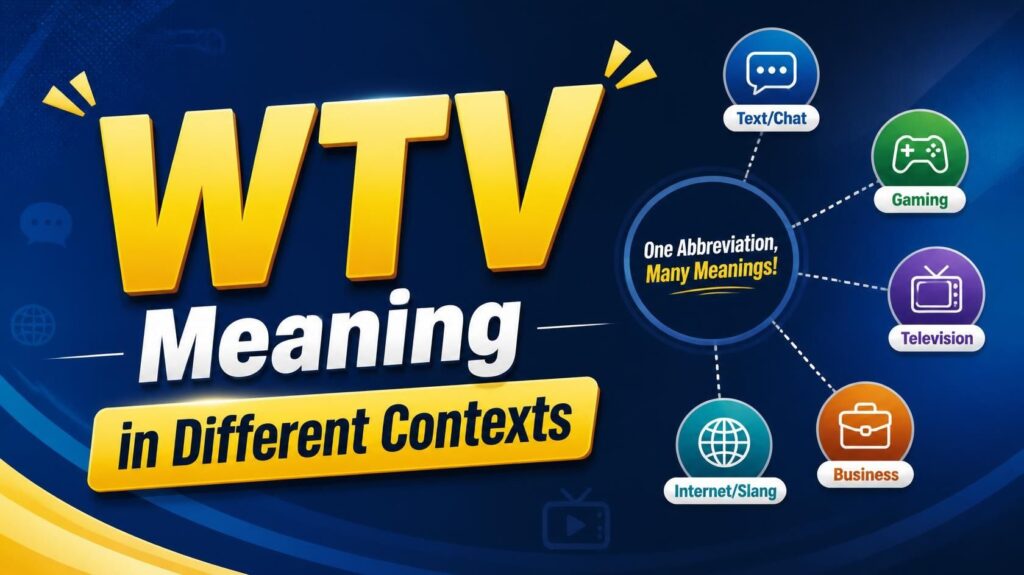
WTV usually means whatever, but its tone can change with the situation. Understanding the wtv meaning in chat requires more than reading the abbreviation alone.
Someone may use WTV to show indifference, acceptance, flexibility, or no preference. In other situations, it can suggest dismissal or frustration.
For example:
Friend: Pizza or tacos tonight?
You: WTV, you pick.
Here, WTV sounds relaxed and flexible.
However, context can give the same word a sharper edge:
Person A: Can we talk about this?
Person B: WTV.
That reply may sound dismissive.
Pay attention to:
- Previous messages
- Punctuation
- Emojis
- The surrounding conversation
- The relationship between the people
- The topic being discussed
WTV works best in informal language where both people understand text slang.
WTV in Text Messages
WTV appears often in text messages because people want quick, simple replies. As a texting abbreviation, it saves time while keeping the conversation casual.
Most often, WTV means whatever. It can tell someone that either choice is fine or that you have no strong preference.
For example:
Person A: Want pizza or burgers?
Person B: WTV works for me.
The sender accepts either option.
However, a one word response can sometimes sound colder:
Person A: Why are you upset?
Person B: WTV.
Here, the sender may want to avoid the conversation.
WTV can express:
- Acceptance
- Indifference
- Flexibility
- Dismissal
- A casual tone
- Frustration
Your interpretation should depend on context rather than the abbreviation alone.
If the message feels unclear, consider the person’s usual texting style before assuming they’re annoyed.
WTV When Making Plans
Making plans often involves several small decisions. WTV gives someone an easy way to say they don’t have a strong preference.
For instance:
Friend: Friday or Saturday?
You: WTV works for me.
That response shows flexibility. You’re comfortable with either day.
The same idea works when choosing food, entertainment, or meeting places.
Friend: Pizza, burgers, or tacos?
You: WTV, I’m good with anything.
Here, WTV communicates acceptance rather than dismissal.
You might also see:
- WTV you want
- WTV works
- WTV is fine
- WTV, you decide
- WTV sounds good
Still, tone matters. A bare WTV can sound uninterested if someone expects an actual choice.
If you want to sound warmer, add a few words. Saying Either option works for me makes your flexibility much clearer.
WTV in an Argument
Arguments can give WTV a completely different feel. Instead of showing flexibility, it may communicate dismissal, frustration, or a desire to end the discussion.
Consider this exchange:
Person A: You need to understand why I’m upset.
Person B: WTV.
That response may sound like the person doesn’t want to engage.
Another example shows stronger frustration:
Person A: We’ve talked about this five times.
Person B: WTV.
Here, WTV could signal that the sender feels annoyed or tired of arguing.
However, don’t automatically assume anger. Some people naturally use short text slang when they feel relaxed.
Look for clues such as:
- Harsh punctuation
- Earlier disagreements
- Short replies
- Angry emojis
- Repeated dismissive messages
If you’re unsure, ask directly. A simple question can prevent a small misunderstanding from becoming a bigger argument.
WTV in Group Chats
Group chats move quickly, so short abbreviations like WTV can save time. People often use WTV when several friends discuss plans or make simple decisions.
For example:
Alex: Should we meet at 6 or 7?
Sam: WTV works for me.
Mia: Same. Let’s do 7.
Here, WTV means the sender has no preference.
Gaming chats can use it in much the same way:
Player 1: Which map should we play?
Player 2: WTV.
The reply leaves the decision to everyone else.
Still, group conversations can make tone harder to judge. Without facial expressions or voice cues, a short WTV might seem dismissive.
In group chats, adding a few words can help:
- WTV you guys prefer
- WTV works for me
- WTV, I’m good either way
That small addition can make the message sound more cooperative.
WTV in Romantic Conversations
Romantic conversations often carry more emotion, so WTV deserves extra attention. The same abbreviation can sound playful, relaxed, distant, or annoyed.
For example:
Partner: Movie or dinner tonight?
You: WTV you want ❤️
Here, WTV can sound affectionate and flexible.
Now consider a tense exchange:
Partner: Do you even care about what happened?
You: WTV.
That response may feel dismissive or emotionally distant.
The relationship between the people matters greatly. A couple who regularly uses text slang may understand WTV differently from two people having a serious disagreement.
Emojis can also soften the message:
Friend: You always pick the weird movies.
You: WTV 😂
The emoji makes the response feel more playful.
If emotions are high, use clearer language instead. A complete sentence can prevent WTV from sounding harsher than intended.
WTV on Social Media
WTV appears across social media because users often favor quick and informal communication. You may see it in Instagram DMs, Snapchat messages, TikTok comments, Facebook posts, captions, and Discord conversations.
For example:
Comment: Why do you care what they think?
Reply: WTV 😂
The response could dismiss the issue while keeping things playful.
On Snapchat, someone might write:
Friend: Where should we go?
Reply: WTV you choose.
On TikTok, WTV may appear in comments during a minor disagreement.
The platform doesn’t usually change the basic meaning. Whatever remains the standard interpretation.
However, social media leaves little room for tone. Readers can’t hear your voice or see your expression.
Before using WTV, consider:
- Your audience
- The conversation’s mood
- Your relationship with the reader
- Whether an emoji would clarify your tone
- Whether a complete phrase would sound better
For serious posts, clearer wording usually works best.
Does WTV Always Sound Rude?
No, WTV doesn’t always sound rude. It usually means whatever and can show flexibility, acceptance, or no preference.
The wtv meaning in chat depends heavily on the surrounding conversation. A friendly message can make WTV feel relaxed.
For example, someone may use it when choosing between pizza and burgers. They simply mean either option is fine.
Example:
- Alex: Pizza or burgers tonight?
- Sam: WTV works for me.
Here, WTV sounds flexible and cooperative. It doesn’t suggest anger or disrespect.
However, a short WTV can feel dismissive during an argument. Punctuation can also change the mood.
Example:
- Alex: Can we please talk about what happened?
- Sam: WTV.
That reply may sound annoyed or uninterested.
Before judging the tone, consider the relationship, previous messages, emojis, and topic. Don’t assume WTV is rude without looking at the full conversation.
WTV Meaning From a Guy
When a guy sends WTV, it usually means whatever. The exact meaning depends on his tone and the conversation.
He might use this texting abbreviation to show no preference. He could also use it when he doesn’t want to continue a minor discussion.
Example:
- You: Should we watch a comedy or action movie?
- Him: WTV you want.
Here, he likely means he’s flexible. He’s letting you choose.
A different situation can create another meaning.
Example:
- You: Why are you upset with me?
- Him: WTV.
This response may suggest frustration, avoidance, or dismissal.
WTV from a guy isn’t automatically flirty, rude, or angry. Look at his usual texting style and the messages around it.
Useful clues include:
- His punctuation
- Previous disagreements
- Emojis
- Your relationship
- The topic being discussed
Context matters more than gender when interpreting WTV.
WTV Meaning From a Girl
When a girl uses WTV, she generally means whatever. She may be showing flexibility, acceptance, or simple indifference.
For example, she might send WTV when deciding where to eat. In that situation, she probably has no strong preference.
Example:
- You: Tacos or burgers?
- Her: WTV is fine.
The message sounds relaxed and cooperative.
However, WTV can feel different during an emotional conversation.
Example:
- You: I thought we agreed to talk about this.
- Her: WTV.
That response might suggest frustration or a desire to end the discussion.
The wtv meaning in chat doesn’t change simply because a girl sends it. Gender doesn’t determine the definition.
Consider the surrounding conversation instead.
Check:
- Her usual texting habits
- Punctuation
- Emojis
- Previous messages
- Your relationship
- The topic
A single WTV message rarely gives enough information to judge someone’s feelings.
WTV Meaning With Different Tones
WTV can carry different emotions even though its basic meaning remains whatever. The tone comes from context rather than the abbreviation itself.
A person might use WTV to show flexibility while making plans. Another person might use it to end an argument.
Common tones include:
- Indifferent
- Accepting
- Dismissive
- Annoyed
- Playful
- Casual
Punctuation can make the message feel stronger. For example, WTV! may sound more emotional than WTV works for me.
Emojis can also soften or change the mood.
Example:
- WTV 😂 — playful
- WTV is fine — accepting
- WTV. — possibly dismissive
- WTV 😒 — annoyed
The wtv meaning in chat becomes clearer when you consider the previous messages.
Never judge the abbreviation alone. Look at the entire exchange before deciding what the sender means.
Indifferent
An indifferent WTV shows that someone doesn’t have a strong opinion. They’re not especially interested in choosing one option.
This meaning often appears during simple decisions. The person may genuinely be comfortable with whatever happens.
Example:
- Mia: Do you want pizza or tacos?
- Jake: WTV.
- Mia: Okay, let’s get pizza.
Here, Jake isn’t necessarily being rude. He simply has no preference.
You can often recognize indifference when WTV appears during low-stakes conversations.
Common situations include:
- Choosing food
- Picking a movie
- Selecting a meeting place
- Deciding what game to play
- Choosing between two colors
An indifferent WTV can sound shorter than a complete sentence. That’s common in text slang.
If you want to sound warmer, say I have no preference or Either option works for me instead.
Accepting
An accepting WTV shows that someone is comfortable with another person’s decision. It can mean whatever you prefer is fine.
This use often appears when people are making plans. The sender doesn’t need to control the final choice.
Example:
- Chris: Should we meet Friday or Saturday?
- Taylor: WTV works for you.
- Chris: Saturday then.
Here, WTV communicates flexibility rather than indifference.
You might also see phrases like:
- WTV you want
- WTV works
- WTV is fine
- WTV you decide
The complete sentence gives the abbreviation a warmer meaning. A single WTV can be harder to interpret.
An accepting tone usually feels cooperative. It doesn’t try to end the conversation.
If you want to avoid confusion, add a few words after WTV. That makes your intention easier to understand.
Dismissive
A dismissive WTV can suggest that someone doesn’t want to continue a conversation. It may communicate that they consider the topic unimportant.
This tone often appears during disagreements. A person may use WTV instead of explaining their position.
Example:
- You: I’m trying to understand why you did that.
- Alex: WTV.
- You: Okay, we can talk later.
The period can make the response feel particularly short or final.
Dismissive WTV may also appear after repeated arguments. The sender could feel tired of explaining themselves.
Look for clues such as:
- Very short replies
- Cold punctuation
- No follow-up questions
- Repeated WTV messages
- Previous disagreement
Still, WTV isn’t automatically dismissive. The surrounding conversation matters.
If you receive it, avoid immediately assuming the worst. Ask a calm question if the situation matters.
Annoyed
An annoyed WTV can show frustration, irritation, or emotional exhaustion. The sender may feel tired of discussing the same subject.
The abbreviation itself doesn’t create the annoyed tone. The surrounding messages usually provide the clue.
Example:
- You: But why won’t you explain it?
- Sam: I already told you.
- You: Just help me understand.
- Sam: WTV.
Here, WTV may suggest that Sam wants to stop arguing.
Other clues can include:
- 😒 or 🙄 emojis
- Repeated short responses
- Sharp punctuation
- Previous disagreements
- Statements showing frustration
An annoyed WTV can feel colder than a casual WTV.
If someone sends it during a heated conversation, give them space before pushing for another response.
Remember that text removes facial expressions and voice tone. You may misread frustration when the sender simply wants to move on.
Playful
A playful WTV can sound lighthearted, teasing, or intentionally dramatic. Friends and romantic partners may use it this way.
The surrounding message usually makes the playful intention obvious. Emojis can strengthen that feeling.
Example:
- You: You definitely picked the worst movie.
- Mia: WTV 😂
- You: You loved it yesterday!
Here, WTV doesn’t necessarily express real indifference. It can act like a playful comeback.
You may also see playful WTV during friendly teasing.
Common clues include:
- Laughing emojis
- Teasing comments
- Exaggerated reactions
- Friendly relationships
- Lighthearted topics
The wtv meaning in chat can therefore be much softer than the literal word whatever suggests.
If the sender normally jokes with you, a playful interpretation may make more sense.
Still, context matters. The same abbreviation could sound cold in a serious conversation.
Casual
A casual WTV is simply a quick way to say whatever during everyday conversation. It’s common in informal text messages and online chats.
People may use it because typing WTV takes less effort than writing the complete word.
Example:
- Liam: What game should we play?
- Noah: WTV you guys want.
- Liam: Let’s play Fortnite.
A casual WTV usually doesn’t carry a strong emotional message. It can simply keep the conversation moving.
You may see it on:
- Text messages
- Instagram DMs
- Snapchat
- TikTok
- Discord
- Gaming chats
- Group conversations
Because WTV is informal language, avoid using it in professional emails, academic writing, job applications, or resumes.
For those situations, choose clearer alternatives such as I am flexible with either option.
In casual conversations, however, WTV can be perfectly natural when everyone understands the tone.
Real Life Examples of WTV
WTV usually means whatever in casual digital communication. However, its tone can change depending on the situation.
The wtv meaning in chat becomes easier to understand when you see how people use it in real conversations.
It can show flexibility when making plans. It can also show indifference when someone has no strong preference.
Sometimes, WTV sounds dismissive. A frustrated person may use it to end a disagreement.
Common situations include:
- Choosing food
- Picking a movie
- Making weekend plans
- Chatting with friends
- Ending minor disagreements
- Responding playfully
- Showing frustration
Conversation example:
- Ava: Where should we eat?
- Mia: WTV works for me.
- Ava: Let’s get tacos then.
Here, WTV sounds accepting and relaxed.
In another conversation, the meaning can feel colder.
Example:
- Ava: Why are you upset?
- Mia: WTV.
- Ava: We can talk later.
The surrounding messages help you understand the intended tone.
Example 1: Choosing Food
People often use WTV when choosing what to eat. It can show that they don’t have a strong preference.
For example, someone may be happy with pizza, burgers, tacos, or another option.
Conversation example:
- Jake: Pizza or burgers tonight?
- Ryan: WTV is good.
- Jake: Cool, let’s get pizza.
Ryan isn’t necessarily being rude. He’s simply leaving the decision to Jake.
You can also make the message sound more cooperative.
Example:
- Jake: Tacos or pizza?
- Ryan: WTV you prefer.
- Jake: Tacos sounds good.
This version clearly communicates flexibility.
In this situation, the wtv meaning in chat is usually whatever you prefer.
It works well with close friends and family. You might also see it in group chats.
If you want to sound more enthusiastic, use Either option works for me instead.
That small change makes your preference clearer and warmer.
Example 2: Choosing a Movie
WTV can also appear when friends are deciding what movie to watch. It usually means the person has no preference.
They may enjoy either movie and simply want someone else to choose.
Conversation example:
- Emma: Comedy or horror tonight?
- Lily: WTV you want.
- Emma: Let’s watch the comedy.
Lily has given Emma control over the decision.
The same abbreviation can sound different if the conversation feels tense.
Example:
- Emma: Which movie do you actually want?
- Lily: WTV.
- Emma: Okay, I’ll pick.
The short reply might suggest indifference.
The wtv meaning in chat depends on the surrounding messages. A longer phrase usually provides more clarity.
You can say:
- WTV you want
- WTV works for me
- WTV is fine
- I’m good with either
These expressions work best in casual conversations. Avoid WTV in formal communication.
Example 3: Ending a Small Argument
Someone may use WTV when they want to stop a minor argument. In this situation, it can sound dismissive.
The person might not want to keep explaining their opinion.
Conversation example:
- Ben: You always pick the same restaurant.
- Tom: You picked it last time.
- Ben: I don’t want to argue.
- Tom: WTV.
Here, WTV can mean forget it or whatever. The speaker may want the disagreement to end.
However, WTV doesn’t always mean anger.
Example:
- Ben: Fine, we can choose your restaurant.
- Tom: WTV works.
- Ben: Great.
That version sounds more accepting.
Watch for context clues such as:
- A previous disagreement
- Short replies
- Cold punctuation
- Frustrated emojis
- Repeated dismissive messages
If you receive WTV during an argument, don’t immediately assume hostility. Give the conversation some space.
Example 4: Making Plans
WTV is useful when people make casual plans. It can show flexibility about time, location, food, or activities.
Someone may use it because they genuinely don’t care which option you choose.
Conversation example:
- Sarah: Friday or Saturday?
- Nina: WTV works for me.
- Sarah: Let’s do Friday.
This sounds cooperative and relaxed.
You can also use WTV when deciding where to meet.
Example:
- Sarah: Coffee shop or your place?
- Nina: WTV you prefer.
- Sarah: Coffee shop sounds easier.
The wtv meaning in chat here is usually no preference.
Adding extra words makes your intention clearer. A bare WTV can sometimes sound uninterested.
Useful alternatives include:
- Either option works for me.
- I’m flexible.
- You can choose.
- I have no preference.
These options are better when you want to sound thoughtful rather than extremely casual.
Example 5: Casual Conversation
WTV can appear naturally in everyday conversations between friends. It often works as a quick response to simple questions.
The person may use it without intending any strong emotion.
Conversation example:
- Alex: What should we play tonight?
- Chris: WTV.
- Alex: Let’s play something competitive.
Chris may simply be letting Alex choose.
WTV can also appear in social media DMs, group chats, gaming conversations, and text messages.
Example:
- Maya: Want to hang out later?
- Zoe: WTV works.
- Maya: I’ll text you after dinner.
The meaning remains whatever or whichever option you prefer.
The tone can become playful when emojis are added.
Example:
- Zoe: WTV 😂
That response may feel lighthearted rather than cold.
Because WTV is informal, use it mainly with friends, family, or casual online contacts.
Example 6: Frustrated Reply
A frustrated person may use WTV after becoming tired of a discussion. The abbreviation can then sound dismissive or emotionally distant.
Conversation example:
- Mark: Why did you cancel again?
- Ryan: I had a reason.
- Mark: You could have told me.
- Ryan: WTV.
Here, WTV may communicate frustration or a desire to end the conversation.
Punctuation can strengthen that feeling.
Example:
- WTV.
The period makes the reply feel more final than a friendly phrase like WTV works for me.
Other clues include:
- 😒 or 🙄 emojis
- Repeated short answers
- Earlier arguments
- Defensive messages
- A serious topic
The wtv meaning in chat should never be judged from the abbreviation alone.
If someone seems frustrated, avoid escalating the situation. A calm response can help.
For example:
Reply:
- Okay. We can talk when you’re ready.
That keeps the conversation from becoming more heated.
Example 7: Playful Text
WTV can sound playful when friends use it during teasing or joking. The sender may not literally mean they don’t care.
Instead, WTV can work as a humorous comeback.
Conversation example:
- Ella: You chose the worst song again.
- Mia: WTV 😂
- Ella: You secretly love it!
The laughing emoji makes the response feel lighter.
Another example can involve friendly teasing.
Conversation example:
- Jake: Admit that my team is better.
- Ryan: WTV 😭
- Jake: That means yes!
Here, WTV creates a playful disagreement.
The wtv meaning in chat can therefore depend heavily on emojis and the relationship between people.
Look for clues such as:
- Laughing emojis
- Teasing
- Inside jokes
- Friendly arguments
- Exaggerated reactions
- A relaxed conversation
A playful WTV usually doesn’t require a serious response.
You can match the tone with a joke, emoji, or lighthearted comeback.
How to Use WTV Naturally
WTV is easy to use when you’re having a casual conversation. It usually means whatever and often shows flexibility or no preference.
The wtv meaning in chat becomes clear when the rest of your message gives enough context.
For example, you can use it when choosing food, movies, games, or weekend plans.
Conversation example:
- Jake: Pizza or tacos?
- Ryan: WTV you want.
- Jake: Let’s get tacos.
Here, WTV sounds relaxed and cooperative.
You can also add a few words after WTV to avoid sounding cold.
Natural examples include:
- WTV works for me.
- WTV you prefer.
- WTV is fine.
- WTV you want to watch.
- WTV you guys decide.
Avoid using WTV in every reply. Too much text slang can make your messages feel careless.
Also, consider the person you’re talking to. Close friends usually understand WTV easily.
If the topic is serious, write a complete sentence instead. Clear communication matters more than saving a few characters.
Is WTV Formal or Informal?
WTV is informal language. It belongs mainly to texting, internet slang, social media, and casual online conversations.
You’ll commonly see it in text messages, group chats, DMs, gaming chats, and social media comments.
The wtv meaning in chat is usually whatever. However, the abbreviation can sound too casual for professional situations.
Avoid WTV in:
- Business emails
- Academic writing
- Job applications
- Resumes
- Workplace communication
- Customer service messages
- Formal documents
Casual example:
- Friend: What time should we meet?
- You: WTV works for me.
That response sounds natural between friends.
A professional version would be clearer.
Formal example:
- Colleague: Would Friday or Monday work better?
- You: Either option works for me.
The meaning stays similar. The language simply becomes more appropriate.
Use WTV when the conversation is relaxed. Choose complete words when professionalism, clarity, or respect matters.
Appropriate Situations
WTV works best when you’re talking casually with people who understand texting abbreviations.
It can make quick conversations easier. You don’t need to write a long response when you genuinely have no preference.
Good situations include:
- Choosing where to eat
- Picking a movie
- Planning casual activities
- Talking with close friends
- Group chats
- Gaming conversations
- Social media DMs
- Lighthearted discussions
Conversation example:
- Emma: Should we play at 7 or 8?
- Lily: WTV works for me.
- Emma: Cool, 8 it is.
Here, WTV clearly communicates flexibility.
You can also use it when someone asks you to choose between two simple options.
Example:
- Alex: Red shirt or blue shirt?
- Sam: WTV you like better.
The wtv meaning in chat feels natural because the conversation is casual.
Still, consider your audience. If someone doesn’t use text slang often, spell out whatever instead.
Situations to Avoid
Although WTV is common in casual conversations, some situations call for clearer language.
Avoid it when the topic is serious, emotional, professional, or sensitive. A short WTV can easily sound dismissive.
You should generally avoid WTV in:
- Job applications
- Resumes
- Academic assignments
- Business emails
- Workplace discussions
- Customer complaints
- Serious relationship conversations
- Important requests
Example to avoid:
- Manager: Can you confirm which deadline works?
- You: WTV.
That answer may sound careless or uninterested.
A better response would be:
- Either deadline works for me.
- I’m flexible with either option.
- I have no preference.
The wtv meaning in chat can also be misunderstood during arguments.
Example:
- Partner: Can we talk about what happened?
- You: WTV.
That could sound angry even if you only meant whatever.
When clarity matters, use complete words. A few extra seconds of typing can prevent unnecessary confusion.
Common Mistakes People Make With WTV
WTV looks simple because it usually means whatever. Still, people can misunderstand its tone or use it in the wrong situation.
The wtv meaning in chat depends on context, punctuation, emojis, and the relationship between people.
Common mistakes include:
- Assuming WTV is always rude
- Ignoring the surrounding conversation
- Using WTV in formal writing
- Assuming WTV always means anger
- Confusing WTV with similar abbreviations
- Using WTV too often
Conversation example:
- Alex: Pizza or burgers?
- Sam: WTV works for me.
Here, WTV shows flexibility.
However, another conversation may make the same abbreviation sound dismissive.
Example:
- Alex: Can we talk about this?
- Sam: WTV.
The second reply feels much colder.
Before interpreting WTV, look at the complete exchange. A single abbreviation rarely tells you exactly how someone feels.
Good texting depends on clarity. If your meaning could be misunderstood, use a few extra words.
Mistake 1: Assuming WTV Is Always Rude
One common mistake is thinking WTV always sounds rude. That isn’t true.
WTV can simply mean that someone has no preference. Friends often use it when making quick decisions.
Conversation example:
- Mia: Pasta or pizza?
- Lily: WTV works for me.
- Mia: Pizza it is!
Lily isn’t dismissing Mia. She’s simply comfortable with either choice.
WTV can show:
- Flexibility
- Acceptance
- No preference
- Casual agreement
- Indifference
However, a bare WTV can sound dismissive in some conversations.
Example:
- You: I’m still upset about yesterday.
- Friend: WTV.
That response may feel cold because of the serious topic.
The wtv meaning in chat depends on the situation. Don’t judge the abbreviation without reading the surrounding messages.
Look at the person’s usual texting style too. Some people naturally use short replies without intending disrespect.
Mistake 2: Ignoring Context
Another mistake is interpreting WTV without considering the conversation around it.
The same abbreviation can communicate acceptance in one message. It can sound frustrated or dismissive in another.
Example 1:
- Jake: Friday or Saturday?
- Ryan: WTV works.
This sounds flexible.
Example 2:
- Jake: Why won’t you listen?
- Ryan: WTV.
This may sound dismissive.
Important context clues include:
- The previous messages
- The topic
- Punctuation
- Emojis
- Relationship between the people
- Recent disagreements
- The sender’s normal texting habits
The wtv meaning in chat becomes much easier to understand when these clues are considered together.
Don’t focus on WTV alone.
If you’re unsure about someone’s intention, ask instead of guessing.
Example:
- You: Are you saying you’re okay with either choice?
A simple question can prevent unnecessary confusion.
Mistake 3: Using WTV in Formal Writing
WTV is an informal texting abbreviation. Using it in formal communication can make your message look careless.
It works well with friends. It doesn’t belong in most professional or academic situations.
Avoid WTV in:
- Business emails
- Job applications
- Resumes
- Academic assignments
- Workplace reports
- Customer service messages
- Formal requests
Example to avoid:
- Manager: Which meeting time works better?
- Employee: WTV.
A professional response sounds clearer.
Better example:
- Employee: Either meeting time works for me.
The wtv meaning in chat is casual because it comes from informal digital communication.
Formal writing requires complete words and clearer phrasing.
Instead of WTV, you can write:
- I have no preference.
- Either option works for me.
- I’m flexible with either option.
- I’m fine with your decision.
These alternatives sound more professional without changing your basic meaning.
Mistake 4: Assuming WTV Means Anger
WTV doesn’t automatically mean someone is angry. It can express several different tones.
A person might use it casually when they don’t care which option gets selected.
Conversation example:
- Emma: Should we watch a comedy?
- Zoe: WTV you want.
- Emma: Great, comedy it is.
Zoe doesn’t sound angry here.
WTV can also show:
- Acceptance
- Flexibility
- Indifference
- Playfulness
- Dismissal
- Frustration
You should look for additional clues before assuming anger.
An annoyed emoji or tense conversation may suggest frustration.
Example:
- You: Why did you change the plan?
- Sam: WTV 🙄
The emoji and context make the tone clearer.
The wtv meaning in chat cannot be determined from the abbreviation alone.
If the message seems unclear, consider the entire conversation rather than immediately assuming the sender is upset.
Mistake 5: Confusing WTV With Other Abbreviations
WTV can look similar to other texting abbreviations. However, these expressions don’t always communicate the same idea.
WTV usually means whatever. Other abbreviations can express different thoughts.
For example:
- IDC = I don’t care
- IDK = I don’t know
- TBH = To be honest
- IMO = In my opinion
- WYD = What you doing
- WYA = Where you at
- FYM = What you mean
- WSP = What’s up
Conversation example:
- Mia: What do you want for dinner?
- Jake: WTV.
Jake means he has no preference.
If he says IDK instead, he may genuinely not know what he wants.
The wtv meaning in chat is therefore different from IDK or IDC.
Understanding these distinctions helps you interpret text slang more accurately.
Don’t treat every short abbreviation as interchangeable.
Mistake 6: Overusing WTV
Using WTV too often can make your messages feel uninterested. Even when you mean no preference, repeated WTV replies may frustrate other people.
Imagine asking someone several questions and receiving WTV every time.
Conversation example:
- You: Where should we eat?
- Friend: WTV.
- You: What movie should we watch?
- Friend: WTV.
- You: What time should we meet?
- Friend: WTV.
That conversation can feel one-sided.
Sometimes, adding a few words makes your response friendlier.
Try:
- WTV works for me.
- I’m good with either.
- You can choose.
- I don’t have a preference.
- Either option sounds good.
The wtv meaning in chat may remain the same. Your communication simply becomes clearer.
Use WTV when it fits the moment. Don’t rely on it for every decision or response.
A little variety makes casual conversations feel more natural.
Related Texting Expressions
Texting uses many shortened expressions to make conversations faster. WTV is one example of informal text slang.
The wtv meaning in chat is usually whatever. However, other abbreviations can express different ideas.
Common related expressions include:
- IDC — I don’t care
- IDK — I don’t know
- TBH — To be honest
- IMO — In my opinion
- WYD — What you doing
- WYA — Where you at
These expressions appear in text messages, DMs, group chats, social media, and gaming conversations.
Conversation example:
- Alex: What should we eat?
- Sam: WTV.
- Alex: You really don’t care?
- Sam: Nope. Anything works.
Each abbreviation has its own purpose. IDC expresses a lack of concern. IDK shows uncertainty. TBH introduces honesty.
Learning these differences helps you understand casual digital communication without guessing.
IDC
IDC means I don’t care. People commonly use it when they have no concern about a particular choice or situation.
It can sound neutral in some conversations. However, it may also feel dismissive depending on the context.
Conversation example:
- Mia: Pizza or tacos?
- Lily: IDC.
- Mia: Okay, I’ll pick tacos.
IDC can sound stronger than WTV because it directly says the person doesn’t care.
The wtv meaning in chat is usually whatever. WTV can sometimes sound more flexible.
IDC commonly appears in:
- Text messages
- Social media
- Group chats
- Gaming chats
- Casual conversations
If you want a softer tone, try Either option works for me.
Also remember that punctuation and emojis can affect how IDC feels.
A message like IDC 😂 may sound playful. A plain IDC. may sound cold.
IDK
IDK means I don’t know. People use it when they lack information or aren’t sure about something.
It’s one of the most common texting abbreviations.
Conversation example:
- Jake: What time does the movie start?
- Ryan: IDK.
- Jake: I’ll check the schedule.
IDK is different from WTV.
The wtv meaning in chat is usually whatever. IDK means the person doesn’t know the answer.
For example:
- WTV = I don’t mind which option.
- IDK = I’m not sure what the answer is.
You may see IDK on:
- Snapchat
- TikTok
- Discord
- Text messages
- Gaming chats
It usually has a casual tone.
IDK can also appear with other abbreviations.
Example:
- IDK TBH.
That means the person honestly doesn’t know.
TBH
TBH means to be honest. People use it before sharing an honest opinion, reaction, or personal thought.
It can introduce something positive, negative, or neutral.
Conversation example:
- Emma: Did you like the movie?
- Noah: TBH, it was boring.
Here, TBH signals that Noah is giving his genuine opinion.
The wtv meaning in chat differs because WTV usually means whatever.
TBH is often used with:
- Personal opinions
- Honest reactions
- Compliments
- Criticism
- Casual conversations
Example:
- TBH, that outfit looks great.
The expression is informal. It works naturally in social media posts and private messages.
Avoid using TBH in formal writing when a professional phrase would be clearer.
You can simply write To be honest in more formal situations.
TBH helps make casual messages shorter while keeping the meaning easy to understand.
IMO
IMO means in my opinion. People use it when sharing a personal view rather than stating an objective fact.
Conversation example:
- Alex: Which game is better?
- Chris: IMO, the second one.
- Alex: I actually prefer the first.
IMO makes it clear that the statement reflects personal judgment.
The wtv meaning in chat is different because WTV usually expresses flexibility, indifference, or dismissal.
You might see IMO when discussing:
- Movies
- Music
- Games
- Food
- Trends
- Social media topics
- Everyday opinions
Example:
- IMO, tacos are better than burgers.
It’s generally casual and common online.
In professional writing, you can use in my opinion instead.
Using the full phrase often sounds more polished and avoids confusion for readers unfamiliar with texting abbreviations.
WYD
WYD means what you doing. It’s a casual texting abbreviation used to ask what someone is currently doing.
It often starts a conversation between friends, romantic partners, or online acquaintances.
Conversation example:
- Mia: WYD?
- Sarah: Just watching TV.
- Mia: Want to play a game?
WYD is different from WTV because it asks about someone’s current activity.
The wtv meaning in chat usually communicates whatever.
WYD commonly appears in:
- Text messages
- Instagram DMs
- Snapchat
- Dating apps
- Group chats
- Casual online conversations
It can sound friendly or playful.
Example:
- WYD tonight? 👀
The emoji may make the question feel more playful or flirty.
Because WYD is informal, avoid it in professional emails or workplace messages.
Use What are you doing? when you need a clearer or more formal version.
WYA
WYA means where you at. It’s a casual way to ask someone about their current location.
Friends often use it when meeting up or trying to find someone.
Conversation example:
- Jake: WYA?
- Ryan: Outside the restaurant.
- Jake: I’m coming now.
WYA is especially common in quick text conversations.
The wtv meaning in chat has nothing to do with location. WTV usually means whatever.
You may see WYA in:
- Text messages
- Snapchat
- Instagram DMs
- Group chats
- Gaming conversations
- Casual social media messages
The expression is informal and conversational.
Example:
- WYA? We’re waiting for you.
A more formal version would be Where are you?
Knowing the difference between WYA and WTV prevents simple misunderstandings.
They may look similar because both are short. Their meanings are completely different.
WTV vs Whatever
WTV and whatever generally communicate the same basic idea. WTV is simply a shortened form used in informal digital communication.
Conversation example:
- Mia: Do you want pizza?
- Jake: WTV.
- Mia: Okay, pizza it is.
You could replace WTV with whatever without changing the basic meaning.
The main difference is style.
- WTV is abbreviated
- Whatever is the complete word
- WTV feels more like text slang
- Whatever works in both casual speech and writing
The wtv meaning in chat is usually understood quickly by people familiar with texting language.
However, whatever can carry different emotional meanings too. It may sound playful, annoyed, accepting, or dismissive.
WTV can carry those same tones.
Use WTV for casual messages. Use whatever when you want clearer wording or when writing for a broader audience.
WTV vs IDC
WTV and IDC can sometimes appear in similar conversations. Both may communicate a lack of strong concern.
However, they aren’t exactly the same.
WTV usually means whatever. IDC directly means I don’t care.
Conversation example:
- Alex: Pizza or burgers?
- Sam: WTV.
- Alex: So either is okay?
- Sam: Yeah.
Now compare IDC:
- Alex: Pizza or burgers?
- Sam: IDC.
IDC can sound more blunt. WTV may feel slightly more flexible depending on the sentence.
The wtv meaning in chat often suggests acceptance or no preference. IDC focuses more directly on caring or not caring.
Tone depends on context.
A softer option would be:
- Either one works for me.
- I have no preference.
- You can choose.
These alternatives reduce the chance of sounding dismissive.
WTV vs IDK
WTV and IDK have completely different basic meanings.
WTV usually means whatever. IDK means I don’t know.
Conversation example:
- Emma: Which restaurant should we try?
- Lily: WTV.
- Emma: So you’re okay with anything?
- Lily: Yeah.
Now compare IDK:
- Emma: Which restaurant should we try?
- Lily: IDK.
- Emma: You’re not sure?
WTV often communicates no preference. IDK communicates uncertainty or lack of knowledge.
The wtv meaning in chat therefore shouldn’t be confused with IDK.
Quick comparison:
- WTV = Whatever
- IDK = I don’t know
- WTV = Either option may be fine
- IDK = I’m uncertain
Both are informal texting expressions.
You’ll commonly find them in DMs, group chats, social media, and casual conversations.
Choosing the correct abbreviation makes your message easier to understand.
Social Media Usage of WTV
WTV is common across casual online communication. People use it when they want a quick way to say whatever.
The wtv meaning in chat can show indifference, acceptance, flexibility, or dismissal. Context usually determines the exact tone.
You may see WTV in:
- Direct messages
- Group chats
- Comments
- Captions
- Gaming conversations
- Casual replies
Conversation example:
- Alex: Should we meet today or tomorrow?
- Sam: WTV works for me.
- Alex: Tomorrow sounds good.
WTV can also appear during playful conversations.
Example:
- Alex: Your team is definitely losing.
- Sam: WTV 😂
The emoji makes the response feel less serious.
However, a plain WTV can sometimes sound cold. That’s especially true during disagreements.
Think about the platform, relationship, previous messages, and punctuation before interpreting the tone.
WTV appears frequently in Instagram DMs, comments, and casual conversations. Users often choose it because short replies fit the platform’s quick communication style.
The wtv meaning in chat usually remains whatever. However, the tone can change depending on the conversation.
Conversation example:
- Mia: Should I post the blue outfit or the black one?
- Zoe: WTV you like.
- Mia: I’ll go with black.
Here, WTV shows flexibility.
In an Instagram comment, it might sound more dismissive.
Example:
- User 1: Your favorite team lost again.
- User 2: WTV 😂
The laughing emoji can make the reply playful.
Instagram users may also combine WTV with emojis, punctuation, or other text slang.
Common combinations include:
- WTV 😂
- WTV lol
- WTV you want
- WTV works
The meaning becomes easier to understand when you read the complete message.
Snapchat
Snapchat encourages quick and casual communication. WTV fits naturally into Snaps and private chats.
People may use it when making plans or responding to everyday questions.
Conversation example:
- Jake: Movie tonight?
- Ryan: WTV you wanna watch.
- Jake: Let’s pick a comedy.
Here, WTV communicates flexibility.
The wtv meaning in chat can change when the conversation becomes emotional.
Example:
- Jake: Are you still mad?
- Ryan: WTV.
- Jake: Okay, we’ll talk later.
That short response may sound dismissive.
Snapchat messages often include emojis, which can provide extra tone clues.
For example:
- WTV 😂 can feel playful
- WTV 😭 can feel dramatic or humorous
- WTV 🙄 may suggest annoyance
- WTV ❤️ can sound softer
Always consider the surrounding messages.
WTV remains informal regardless of whether it appears in a Snap, private message, or group conversation.
TikTok
TikTok users may use WTV in comments, direct messages, and conversations about videos.
It often appears when someone wants to give a quick reaction without writing a complete sentence.
Conversation example:
- Ava: Which creator should we watch next?
- Mia: WTV you choose.
- Ava: Okay, I’ll pick one.
Here, WTV means whatever you choose.
The wtv meaning in chat can also become playful in TikTok comments.
Example:
- User 1: This is the best song ever.
- User 2: WTV 😂
The response might be teasing rather than genuinely dismissive.
Tone depends on:
- The video topic
- Comment history
- Emojis
- Punctuation
- Relationship between users
- Previous replies
TikTok comments can be public, so short abbreviations may sometimes be interpreted differently by strangers.
If the topic is serious, a complete response is usually safer.
WTV works best for relaxed conversations and casual reactions.
Discord
WTV is common on Discord because users often communicate quickly in servers, private messages, and gaming chats.
Players may use it when choosing games, maps, characters, or strategies.
Conversation example:
- Chris: Ranked or casual?
- Ben: WTV works.
- Chris: Let’s play ranked.
The wtv meaning in chat here usually suggests no preference.
However, Discord conversations can become intense during gaming or disagreements.
Example:
- Chris: Why did you leave the match?
- Ben: WTV.
- Chris: Alright, forget it.
In this situation, WTV may sound dismissive.
Discord users also combine WTV with other text slang.
Examples include:
- WTV lol
- WTV bro
- WTV 😂
- WTV you guys want
The meaning depends on the channel and conversation.
A friendly gaming chat usually makes WTV feel casual. A heated discussion can make the same abbreviation sound frustrated.
WTV can appear in Facebook comments, Messenger chats, groups, and casual posts.
People usually use it when responding quickly or showing that they have no strong preference.
Conversation example:
- Mark: Should we meet Saturday or Sunday?
- Paul: WTV works for me.
- Mark: Sunday then.
The wtv meaning in chat is usually whatever. The phrase can show flexibility without much explanation.
In comments, WTV can sometimes sound dismissive.
Example:
- User 1: You should try this restaurant.
- User 2: WTV.
Without more context, readers may interpret that response as uninterested.
Adding a few words can make your meaning clearer.
Try:
- WTV you prefer.
- WTV works for me.
- Either option is fine.
Facebook has a wide range of users, so not everyone knows every abbreviation.
If your audience is unfamiliar with text slang, writing whatever may prevent confusion.
Professional Alternatives to WTV
WTV is informal and usually doesn’t belong in professional communication.
The wtv meaning in chat may be clear to friends. However, workplace conversations require more precise wording.
Avoid WTV in:
- Business emails
- Job applications
- Resumes
- Academic writing
- Client messages
- Customer service communication
- Workplace reports
Instead, use professional alternatives.
Casual:
- WTV works for me.
Professional:
- Either option works for me.
Other useful alternatives include:
- I have no preference.
- I am flexible with either option.
- I am fine with your decision.
- Either choice is acceptable.
- I’m comfortable with either option.
Conversation example:
- Manager: Would Tuesday or Wednesday work better?
- Employee: Either day works well for me.
These phrases sound respectful and clear.
They also remove the uncertainty that can come with short text slang.
When professionalism matters, clarity should always come before convenience.
How to Reply to WTV
Your response to WTV depends on the tone and situation. First, decide whether the person sounds flexible, indifferent, playful, or annoyed.
If WTV means no preference, simply choose an option.
Conversation example:
- Mia: Pizza or tacos?
- Jake: WTV.
- Mia: Let’s do tacos.
If WTV sounds dismissive, avoid immediately becoming defensive.
Example:
- You: Can we talk about this?
- Friend: WTV.
- You: No worries. We can discuss it later.
You can also ask for clarification.
Try responses such as:
- So either option works?
- Do you really not mind?
- Want me to choose?
- Are you okay with that?
The wtv meaning in chat becomes easier to understand when you ask a simple follow-up.
If the message feels playful, you can match the energy.
Example:
- Friend: WTV 😂
- You: Haha, fine. I’ll choose then.
Keep your response appropriate for the relationship and situation.
Does WTV Mean Whatever in Texting?
Yes. WTV usually means whatever in texting and online conversations.
It is a shortened form commonly used in informal digital communication. People use it to save time or keep messages brief.
The wtv meaning in chat can express several ideas.
It may show:
- Indifference
- Acceptance
- Flexibility
- No preference
- Dismissal
- Frustration
- Playfulness
Conversation example:
- Alex: Comedy or action?
- Sam: WTV you want.
- Alex: Action sounds good.
Here, WTV means whatever you want.
However, WTV doesn’t always carry the same emotional tone.
Example:
- Alex: Why are you ignoring me?
- Sam: WTV.
That response may sound dismissive.
Context matters. Look at punctuation, emojis, previous messages, and the relationship between the people.
So, while whatever is the basic definition, the emotional meaning can change from one conversation to another.
Regional and Generational Use of WTV
WTV is mainly associated with informal internet communication and texting culture. Its use can vary between age groups, online communities, and regions.
Younger users who regularly communicate through social media may recognize WTV quickly. Other people may prefer writing the complete word whatever.
The wtv meaning in chat generally stays the same across regions. The frequency and familiarity can differ.
You may see WTV more often among people who regularly use:
- Text messages
- Snapchat
- TikTok
- Discord
- Gaming chats
- Online communities
Different generations may have different preferences for abbreviations.
For example, one person may write WTV. Another may simply type whatever or idc.
Conversation example:
- Parent: What do you want for dinner?
- Teen: WTV.
- Parent: What does that mean?
- Teen: Whatever. I don’t mind.
The abbreviation is informal. When speaking with someone unfamiliar with text slang, spelling out the word can make communication easier.
Practice Questions
Practice questions can help you understand how WTV works in different conversations. The abbreviation usually means whatever.
The wtv meaning in chat can change slightly depending on the speaker’s tone and situation.
Read each example carefully before checking the answers.
Pay attention to the surrounding conversation. Look for clues such as punctuation, emojis, and previous messages.
These questions cover common situations involving WTV.
- Making plans
- Choosing food
- Understanding tone
- Handling disagreements
- Comparing WTV with other abbreviations
- Identifying informal language
Practice example:
- Mia: Pizza or tacos?
- Emma: WTV works for me.
Ask yourself what Emma is communicating. Is she angry or simply flexible?
The goal isn’t just to memorize the definition. You should learn how people actually use WTV in everyday conversations.
That makes it easier to understand texts, DMs, comments, and group chats.
Question 1
What does WTV usually mean in a casual text message?
A. What time is very late
B. Whatever
C. Where they visit
D. Why they vanished
Think about the most common meaning of this texting abbreviation.
WTV is widely used as a shortened form of a common everyday word.
Conversation example:
- Alex: What should we order?
- Sam: WTV you want.
- Alex: Okay, I’ll choose.
In this conversation, Sam isn’t asking a question. Sam is giving Alex freedom to decide.
The wtv meaning in chat is usually whatever.
This expression can communicate flexibility or no preference. It can also sound dismissive when used during an argument.
The correct interpretation depends on the situation.
However, the basic definition remains consistent in most casual texting situations.
Remember that WTV belongs to informal language. It’s common in messages, social media, gaming chats, and DMs.
Question 2
Which response best shows that WTV means someone has no preference?
A. WTV works for me.
B. WTV, I’m extremely angry.
C. WTV, I don’t understand.
D. WTV, stop talking to me.
Look for the response that clearly communicates flexibility.
When someone says WTV works for me, they usually mean either choice is acceptable.
Conversation example:
- Jake: Should we meet Friday or Saturday?
- Ryan: WTV works for me.
- Jake: Let’s meet Saturday.
Ryan isn’t rejecting either option. He’s allowing Jake to choose.
The wtv meaning in chat can therefore express acceptance or flexibility.
Other useful phrases with a similar meaning include:
- Either option works for me.
- I have no preference.
- You can choose.
- I’m flexible.
Context remains important.
A simple WTV may be less clear than WTV works for me. Adding a few words can make the intended tone easier to understand.
Question 3
When might WTV sound dismissive instead of friendly?
A. When choosing between two snacks
B. When selecting a movie
C. During a serious disagreement
D. When making weekend plans
Consider the topic before deciding what the abbreviation means emotionally.
A short WTV can sound dismissive when someone is discussing an important or emotional issue.
Conversation example:
- Mia: Can we talk about what happened?
- Lily: WTV.
- Mia: Okay, we can talk later.
Here, the response may suggest that Lily doesn’t want to continue the discussion.
The wtv meaning in chat is still whatever. The emotional tone has changed because of the situation.
Important clues include:
- Previous arguments
- Short responses
- Punctuation
- Emojis
- Relationship between the people
- Seriousness of the topic
WTV isn’t automatically rude.
You need to consider the complete conversation before deciding whether someone sounds dismissive.
Question 4
Which situation is most appropriate for using WTV?
A. A job application
B. A formal business report
C. An academic assignment
D. A casual conversation with a friend
WTV is informal text slang. It works best when the conversation is relaxed.
Conversation example:
- Friend: Pizza or burgers?
- You: WTV you want.
- Friend: Pizza then.
This is a natural setting for the abbreviation.
The wtv meaning in chat is easy to understand between people who regularly use texting slang.
You should generally avoid WTV in formal situations.
Instead, use phrases such as:
- Either option works for me.
- I have no preference.
- I am flexible with either option.
- I am fine with your decision.
Professional communication requires clearer wording.
Using complete words also helps when your audience may not understand internet slang.
The important rule is simple: use WTV with the right audience and in the right setting.
Question 5
How is WTV different from IDK?
A. WTV means whatever, while IDK means I don’t know.
B. WTV means where you are, while IDK means whatever.
C. WTV means to be honest, while IDK means in my opinion.
D. WTV and IDK always have exactly the same meaning.
WTV and IDK may both appear as short replies. Their meanings are different.
Conversation example:
- Emma: Which restaurant should we try?
- Noah: WTV.
- Emma: So you don’t mind?
Here, Noah is showing no preference.
Compare that with:
- Emma: Which restaurant is open tonight?
- Noah: IDK.
Noah is saying he doesn’t know the answer.
The wtv meaning in chat is whatever. IDK means I don’t know.
Remember these differences:
- WTV = Whatever
- IDK = I don’t know
- WTV can show flexibility
- IDK usually shows uncertainty
Understanding these distinctions helps you read casual messages more accurately.
Answers
The answers explain why each choice fits the conversation.
Question 1: B — Whatever
WTV is commonly used as a shortened form of whatever in casual digital communication.
Question 2: A — WTV works for me
This phrase clearly shows flexibility and no preference between the available choices.
Question 3: C — During a serious disagreement
A short WTV can sound dismissive when someone wants to end an emotional discussion.
Question 4: D — A casual conversation with a friend
WTV is informal and works naturally in relaxed conversations with people familiar with texting slang.
Question 5: A — WTV means whatever, while IDK means I don’t know
These abbreviations communicate different ideas even though both are common in casual messages.
The wtv meaning in chat is usually whatever. Still, tone depends on context.
Before interpreting WTV, check the surrounding conversation. Consider punctuation, emojis, and the relationship between the speakers.
That simple habit can prevent many texting misunderstandings.
FAQs
What does WTV mean in a text?
WTV usually means whatever in casual messages. The wtv meaning in chat can show indifference, acceptance, flexibility, or dismissal.
Does WTV mean rude?
WTV is not always rude. Its tone depends on context, punctuation, emojis, and the relationship between people in conversation.
What does WTV mean from a guy?
WTV from a guy usually means whatever. The wtv meaning in chat may show acceptance, no preference, playfulness, or frustration.
What does WTV mean from a girl?
WTV from a girl usually means whatever. The wtv meaning in chat depends on her tone, context, and previous messages.
Is WTV appropriate for formal writing?
WTV is informal text slang and should be avoided in formal writing. Use clear phrases like I have no preference instead.